
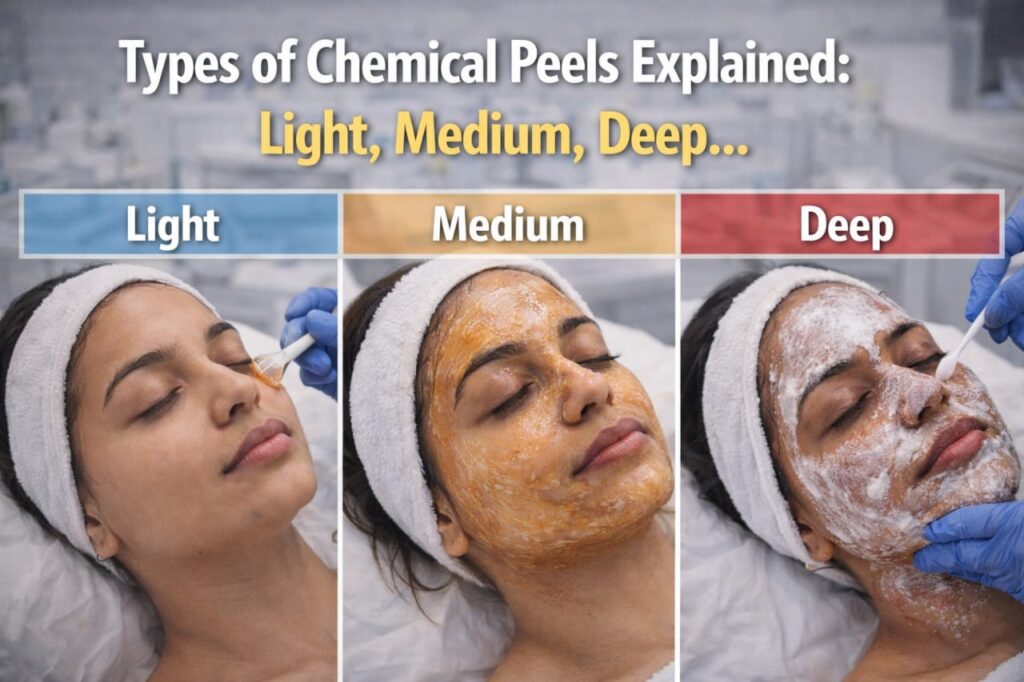
Types of Chemical Peels are one of the most trusted dermatological treatments for improving skin quality, reducing imperfections, and restoring a youthful glow. These treatments work by applying a chemical solution to the skin, which causes controlled exfoliation and eventually peels off, revealing fresh, healthier skin beneath.
People today are increasingly choosing chemical peels to address common concerns like acne, pigmentation, dullness, uneven tone, and signs of aging. The reason behind their popularity is simple — they are customizable, effective, and suitable for a wide range of skin types when performed correctly.
Understanding the different Types of Chemical Peels is important because each type works at a different depth and targets specific skin concerns. Choosing the right one can make a significant difference in your results and overall skin health.
What Are Chemical Peels and How Do They Work?
Chemical peels are advanced skin-resurfacing procedures that use carefully formulated acids to remove damaged outer layers of the skin. This process accelerates cell turnover and stimulates collagen production, which helps in improving skin texture and tone over time.
There are three primary Types of Chemical Peels, and each one differs based on how deeply it penetrates the skin. Light peels act only on the surface, medium peels reach the middle layers, and deep peels go even further to treat more severe concerns.
The treatment usually begins with cleansing the skin, followed by the application of a chemical solution. You might feel a mild tingling or burning sensation depending on the strength of the peel. Once the process is complete, the skin begins to exfoliate over the next few days.
This controlled exfoliation helps in removing dead skin cells, unclogging pores, and improving overall skin clarity. Over time, the skin appears smoother, brighter, and more even-toned. Regular sessions, especially with lighter peels, can significantly enhance long-term skin health.
Types of Chemical Peels: Light Peels (Superficial Peels)
Light peels are the gentlest among all Types of Chemical Peels, making them ideal for individuals who are new to skin treatments or those who prefer minimal downtime. These peels primarily work on the outermost layer of the skin and provide subtle yet noticeable improvements.
They commonly use mild acids such as glycolic acid, lactic acid, or salicylic acid. These ingredients gently exfoliate the skin, helping to remove dull and damaged cells without penetrating too deeply. Because of this, the recovery time is very short, and most people can resume their daily activities immediately.
Light peels are especially beneficial for people dealing with mild acne, slight discoloration, rough texture, or early signs of aging. They help in refreshing the skin and giving it a healthy glow without causing intense peeling or irritation.
Benefits of Light Peels:
- Smoothens rough skin texture gradually
- Adds natural brightness and glow
- Helps control mild acne and oiliness
- Reduces minor pigmentation and uneven tone
Downtime: Minimal to none, slight redness may occur
Frequency: Can be done every 2–4 weeks for best results
With consistent sessions, light peels can maintain skin health and prevent future skin issues, making them a great maintenance treatment.
Types of Chemical Peels: Medium Peels
Medium peels are a step above light peels and provide more noticeable and targeted results. Among all Types of Chemical Peels, these are often chosen by individuals who want to address moderate skin concerns without opting for very aggressive treatments.
These peels usually contain trichloroacetic acid (TCA), which penetrates deeper into the skin layers. As a result, they are more effective in treating acne scars, pigmentation, sun damage, and fine lines. The treatment process may feel slightly more intense compared to light peels, and proper aftercare becomes very important.
After the procedure, the skin typically becomes red and starts peeling within a few days. This peeling phase is a natural part of the healing process and indicates that the damaged skin is being replaced by new, healthier skin.
Benefits of Medium Peels:
- Reduces visible acne scars and marks
- Improves uneven skin tone and pigmentation
- Minimizes fine lines and wrinkles
- Enhances overall skin clarity and smoothness
Downtime: Around 5–7 days with visible peeling
Frequency: Usually done every 3–6 months
Medium peels strike a balance between effectiveness and recovery time, making them a popular choice for people looking for more significant improvements.
Deep Chemical Peels: Advanced Skin Resurfacing
Deep peels are the most intensive among the Types of Chemical Peels and are designed for individuals with more severe skin concerns. These treatments penetrate deeply into the skin layers and deliver dramatic, long-lasting results.
They typically use strong chemical agents like phenol and are performed under strict medical supervision. Due to their intensity, deep peels are not suitable for everyone and require careful evaluation before the procedure.
The recovery process is longer compared to other peels, often taking a few weeks. During this time, the skin undergoes significant peeling and healing. However, the results can be transformative, making the process worthwhile for those who need it.
Benefits of Deep Peels:
- Significantly reduces deep wrinkles and fine lines
- Improves severe sun damage and pigmentation
- Treats deep scars effectively
- Tightens and rejuvenates the skin
Downtime: 2–3 weeks or more
Frequency: Usually performed once due to strong effects
Deep peels are best suited for those seeking major skin transformation and should always be done by experienced professionals.
Choosing the Right Types of Chemical Peels for Your Skin
Selecting the right Types of Chemical Peels is not a one-size-fits-all decision. It depends on your skin type, concerns, lifestyle, and how much downtime you can manage. Choosing incorrectly can lead to unsatisfactory results or even skin irritation, which is why professional guidance is highly recommended.
For example, if you have sensitive skin or are just starting out, a light peel would be the safest option. If your concerns include acne scars or pigmentation, a medium peel may be more suitable. For deep wrinkles or severe skin damage, a deep peel might be considered under expert supervision.
Other factors like age, sun exposure, and skincare routine also play a role in determining the right treatment. A proper consultation helps in analyzing your skin condition and customizing the treatment plan accordingly.
Making an informed choice ensures better results, minimal risks, and healthier skin in the long run.
Aftercare Tips for Best Results
After undergoing any of the Types of Chemical Peels, following the right aftercare routine is just as important as the treatment itself. Proper care helps in faster healing, enhances results, and prevents complications like irritation or pigmentation.
Your skin becomes more sensitive after a peel, so protecting it from external damage is crucial. Sun exposure should be strictly avoided, and a good sunscreen must be used daily. Hydration also plays a key role in helping the skin recover smoothly.
It is common to experience peeling, dryness, or slight redness depending on the type of peel. However, you should never pick or peel the skin manually, as it can lead to scarring or infection.
Important Aftercare Tips:
- Apply broad-spectrum sunscreen regularly
- Keep your skin moisturized at all times
- Avoid harsh skincare products for a few days
- Do not touch or peel the flaking skin
- Follow all instructions given by your dermatologist
Consistent aftercare ensures that you get the maximum benefits from your treatment while keeping your skin safe and healthy.
Final Thoughts
Understanding the different Types of Chemical Peels allows you to take a more confident and informed step toward better skin. Each peel type has its own purpose, benefits, and level of intensity, making it important to choose wisely.
Whether you are looking for a quick refresh with a light peel or a more noticeable transformation with a deeper treatment, chemical peels offer versatile solutions for a wide range of skin concerns.
With the right approach, proper guidance, and good aftercare, these treatments can significantly improve your skin’s appearance, texture, and overall health — helping you achieve clearer, smoother, and more radiant skin over time.
Leave a Comment
Your email address will not be published. Required fields are marked *