
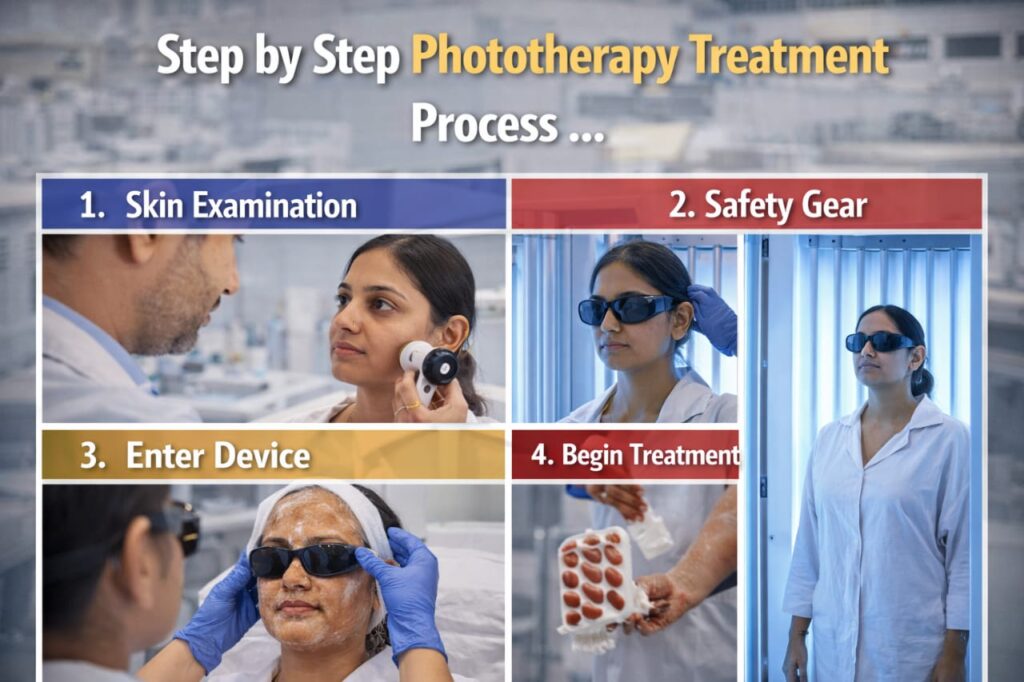
Introduction to the Phototherapy Treatment Process
Phototherapy Treatment Process is a medically guided skin treatment that uses controlled light exposure to manage various skin conditions safely and effectively. This method is widely recommended by dermatologists for issues like psoriasis, eczema, vitiligo, and certain types of dermatitis. The process is non-invasive, making it a preferred option for patients who want results without surgery. Understanding how it works step by step helps patients feel more confident and prepared before starting their sessions.
Who Needs the Phototherapy Treatment Process?
Phototherapy Treatment Process is ideal for individuals dealing with chronic skin concerns that do not respond well to topical creams alone. Doctors usually suggest this treatment when symptoms become persistent or severe.
Common conditions treated include:
- Psoriasis with thick, scaly patches
- Eczema causing itching and inflammation
- Vitiligo leading to loss of skin pigment
- Certain allergic skin reactions
This treatment is customized based on the patient’s skin type and condition severity, ensuring safe and targeted results.
Step 1: Initial Consultation and Skin Assessment
The Phototherapy Treatment Process begins with a detailed consultation where a dermatologist evaluates your skin condition. This step is very important because it helps determine the right type of light therapy and dosage.
During this stage:
- Medical history is reviewed
- Skin sensitivity is checked
- A treatment schedule is planned
This personalized approach ensures that the therapy is both effective and safe.
Step 2: Preparing for the Session
Before starting the Phototherapy Treatment Process, proper preparation is required. Patients are usually advised to avoid applying perfumes, lotions, or makeup on the treatment area. Clean skin helps the light penetrate effectively.
Protective measures include:
- Wearing goggles to shield the eyes
- Covering unaffected areas if needed
- Following doctor’s instructions carefully
Preparation plays a key role in achieving consistent results.
Step 3: Light Exposure Procedure
In this stage of the Phototherapy Treatment Process, the patient is exposed to controlled ultraviolet (UV) light using specialized medical equipment. The duration of exposure depends on the condition being treated and the patient’s skin response.
Sessions are typically:
- Short in duration (a few seconds to minutes)
- Conducted multiple times a week
- Gradually increased based on tolerance
The procedure is painless, though mild warmth may be felt.
Step 4: Monitoring and Adjustments
A crucial part of the Phototherapy Treatment Process is continuous monitoring. Dermatologists closely observe how the skin responds after each session. Based on this, they may adjust the light intensity or session duration.
This step ensures:
- Reduced risk of side effects
- Better treatment outcomes
- Safe progression of therapy
Regular follow-ups help maintain consistency and effectiveness.
Step 5: Post-Treatment Care and Skin Protection
After completing a session in the Phototherapy Treatment Process, proper aftercare is essential to protect the skin. The treated area may feel slightly dry or sensitive, so moisturizing becomes important.
Post-care tips include:
- Applying gentle, dermatologist-recommended moisturizers
- Avoiding direct sun exposure immediately after sessions
- Using sunscreen regularly
These steps help maintain skin health and enhance treatment benefits.
Benefits of the Phototherapy Treatment Process
Phototherapy Treatment Process offers several advantages for patients struggling with long-term skin conditions. It is a scientifically backed method with visible improvements over time.
Key benefits include:
- Non-invasive and painless approach
- Suitable for various skin conditions
- Gradual and natural-looking results
- Minimal downtime
With consistent sessions, many patients notice reduced symptoms and improved skin texture.
Possible Side Effects and Safety Tips
While the Phototherapy Treatment Process is generally safe, some mild side effects may occur if not properly monitored. These are usually temporary and manageable.
Possible side effects:
- Mild redness or irritation
- Dryness or slight itching
- Sensitivity to sunlight
Safety tips to follow:
- Always attend sessions under medical supervision
- Stick to the prescribed schedule
- Inform your doctor about any discomfort
Proper care minimizes risks and ensures a smooth treatment journey.
Conclusion: What to Expect from the Phototherapy Treatment Process
Phototherapy Treatment Process is a reliable and effective solution for managing chronic skin conditions when performed under expert guidance. From consultation to aftercare, every step is designed to deliver safe and lasting results. Patients who follow the recommended plan and maintain consistency often experience significant improvements in their skin health.
Leave a Comment
Your email address will not be published. Required fields are marked *