
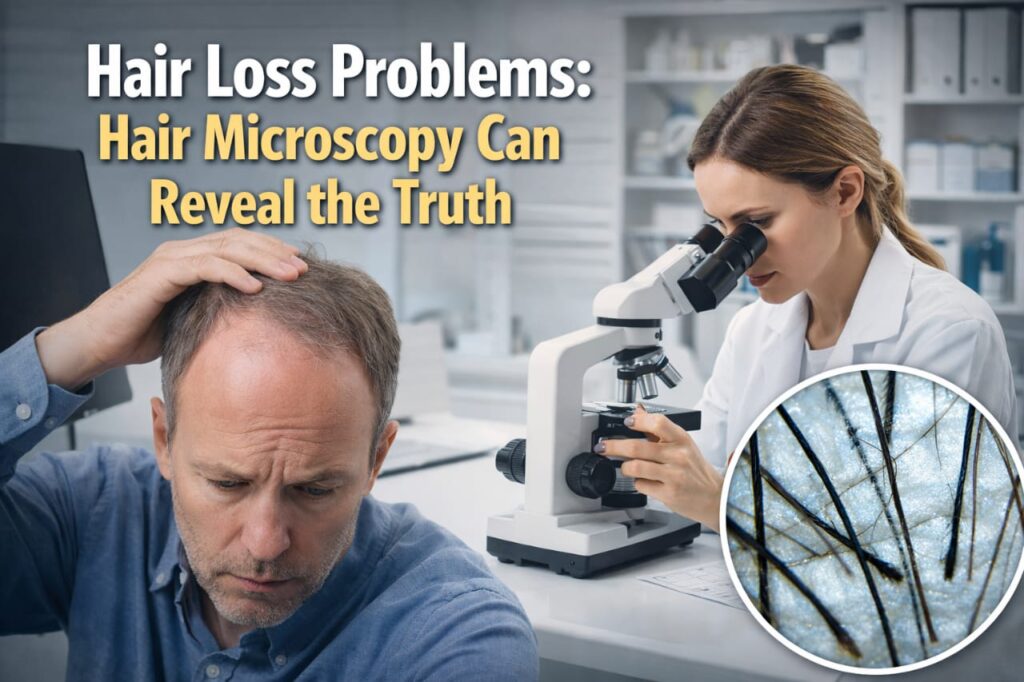
Hair Loss Problems are becoming increasingly common among people of all age groups, and many individuals ignore the early symptoms thinking they are temporary. However, what starts as mild hair fall can gradually turn into severe thinning or even permanent loss if not addressed properly. Hair is often seen as a reflection of overall health, and when something goes wrong internally, your hair is one of the first things to show it. Instead of experimenting with random oils, shampoos, or home remedies, understanding the real cause is essential. This is where advanced diagnostic techniques like hair microscopy play a crucial role in uncovering the truth behind your hair condition and guiding you toward the right solution.
Understanding Hair Loss Problems and Their Real Causes
When we talk about Hair Loss Problems, it is important to understand that there is no single cause behind them. Each person’s hair loss journey is different, and the underlying reasons can range from simple lifestyle habits to complex medical conditions. Poor nutrition is one of the most common factors, especially when the body lacks essential vitamins and minerals required for healthy hair growth. Hormonal imbalances also play a major role, particularly in conditions like thyroid disorders or PCOS, which can disrupt the natural hair growth cycle. Stress, both physical and emotional, is another silent trigger that weakens hair roots over time. In addition to these, scalp-related issues such as dandruff, infections, or excessive oil production can damage hair follicles. Genetic factors also contribute significantly, especially in cases of pattern baldness.
Common causes include:
- Nutritional deficiencies like iron, protein, and vitamins
- Hormonal imbalances affecting hair growth cycles
- High stress levels impacting hair roots
- Scalp infections and dandruff issues
- Genetic or hereditary hair loss conditions
Understanding these causes is the first step toward finding a permanent solution instead of temporary fixes.
What is Hair Microscopy and How It Works
Hair microscopy is a modern diagnostic technique that allows specialists to closely examine your hair and scalp using high magnification tools. For individuals dealing with Hair Loss Problems, this method provides a deeper understanding of what is happening at the root level, something that cannot be observed through a normal visual check. Through this process, the structure of the hair shaft can be analyzed to detect damage, weakness, or abnormalities. The scalp condition can also be evaluated to identify issues such as clogged follicles, inflammation, or infections. Additionally, hair microscopy helps in studying the growth cycle of hair, determining whether hair is actively growing, resting, or shedding prematurely.
Hair microscopy helps in:
- Identifying root-level hair damage
- Detecting scalp conditions early
- Understanding hair growth patterns
- Finding the exact reason for hair fall
This detailed analysis removes uncertainty and helps professionals design a treatment plan that is based on facts rather than assumptions, making it far more effective.
Hair Loss Problems: Why Early Diagnosis Matters
Ignoring Hair Loss Problems during the initial stages is one of the biggest mistakes people make. Hair loss does not usually happen overnight; it progresses gradually, giving multiple warning signs along the way. Early diagnosis is extremely important because it allows you to address the issue before it becomes severe or irreversible. When hair follicles are still active but weakened, they can often be revived with the right treatment and care. However, if the problem is ignored for too long, those follicles may stop producing hair altogether, leading to permanent loss.
Benefits of early diagnosis include:
- Faster control over hair fall
- Prevention of permanent hair damage
- Reduced treatment time and cost
- Better chances of hair regrowth
By using techniques like hair microscopy at an early stage, the exact cause can be identified quickly, and corrective measures can be started immediately.
Key Signs You Shouldn’t Ignore
Many individuals fail to recognize the early signs of Hair Loss Problems, assuming that hair fall is a normal part of life. While losing a small amount of hair daily is natural, noticeable changes in hair volume, texture, or scalp condition should not be ignored. If you find excessive hair strands on your pillow, in the shower, or on your comb, it could be an early indicator of a deeper issue. Gradual thinning around the temples or crown area is another common sign that often goes unnoticed until it becomes prominent. Changes in scalp health, such as persistent itching, flakiness, or irritation, may also signal underlying problems affecting hair growth.
Watch for these warning signs:
- Excessive hair fall during washing or combing
- Visible thinning in certain areas
- Itchy, flaky, or irritated scalp
- Hair becoming weak and brittle
- Slower or reduced hair growth
Paying attention to these signs and seeking timely evaluation can make a significant difference in preventing further damage.
How Hair Microscopy Helps in Personalized Treatment
One of the most valuable advantages of using hair microscopy for Hair Loss Problems is the ability to create a personalized treatment plan. Unlike generic solutions that are marketed to everyone, this approach focuses specifically on your unique condition. Once the analysis is complete, the treatment can be tailored based on the exact cause of hair loss. For instance, if the issue is related to nutritional deficiency, the focus will be on correcting diet and supplementation. If scalp conditions are responsible, targeted treatments can be recommended to restore scalp health. In cases where stress or lifestyle factors are contributing, appropriate changes can be suggested to improve overall well-being.
Personalized treatment may include:
- Customized diet and nutrition plans
- Scalp treatments and medical care
- Lifestyle and stress management changes
- Proper hair care routines based on your condition
This customized approach ensures that every aspect of the problem is addressed effectively, leading to better and faster results compared to trial-and-error methods.
Final Thoughts on Hair Loss Problems
Living with Hair Loss Problems can affect not only your appearance but also your confidence and self-esteem. However, the good news is that most hair-related issues can be managed or even reversed if diagnosed correctly and treated at the right time. Instead of relying on temporary fixes or unverified solutions, it is always better to choose a scientific and reliable approach like hair microscopy. Understanding the root cause is the first and most important step toward recovery. If you are experiencing continuous hair fall or noticeable changes in your hair, taking action now can save you from bigger concerns in the future. With the right guidance, proper care, and timely treatment, you can regain healthy hair and restore your confidence naturally.
Leave a Comment
Your email address will not be published. Required fields are marked *